
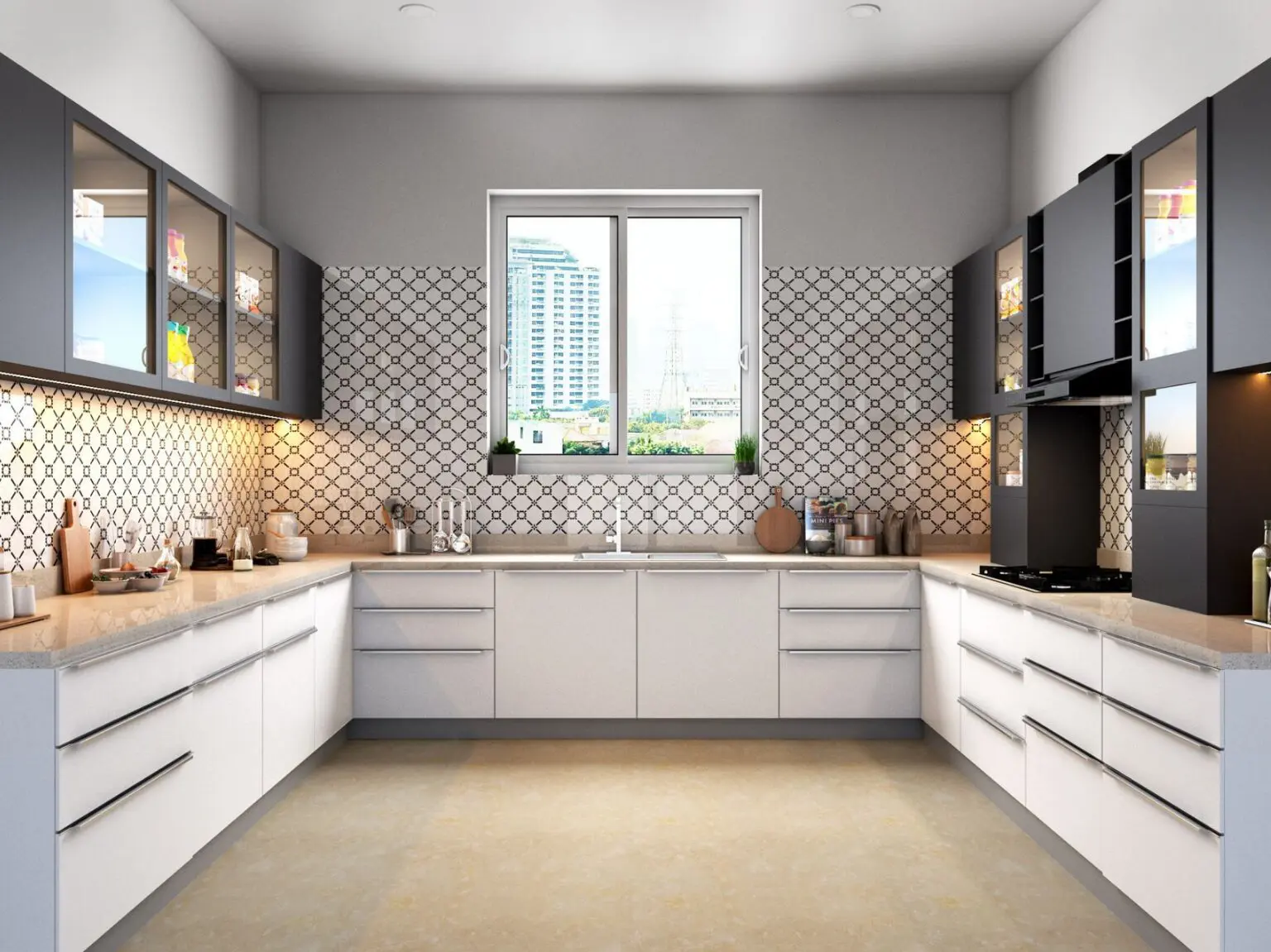
Choosing between a modular kitchen and a carpenter-made kitchen is not simply a choice between modern and traditional. It is a decision about how the kitchen will be designed, manufactured, installed, repaired and supported after handover. A modular kitchen uses measured cabinet units that are largely factory-produced and assembled at the property. A carpenter-made kitchen is fabricated mainly at the site by a local team, usually with more decisions being made during execution.
For most new apartments in Lucknow, a well-specified modular kitchen offers the more predictable finish, shorter site installation and clearer accountability. A capable carpenter can be the better option for an irregular room, a retained masonry platform, heritage details or a highly specific low-budget build. The right answer depends less on the label and more on the written specification, workmanship and service commitment.
Choose modular when you value design visualization, machine finishing, organized storage, faster installation and a documented warranty. Choose carpenter-made when the room is highly irregular, you want traditional craftsmanship or you need to adjust the design continually on site. Compare complete quotations, not headline prices.
What Is a Modular Kitchen?
A modular kitchen divides storage into standardized but configurable units such as drawer stacks, sink cabinets, wall cabinets, corner units and tall pantries. After the layout and materials are approved, components are cut, edge-finished and drilled in a workshop or factory. The units are then transported and installed on site. Good modular planning also coordinates appliances, work zones, internal accessories, lighting and service access before production begins.
What Is a Carpenter-Made Kitchen?
A carpenter-made kitchen is built by a carpenter or joinery team, commonly at the home itself. Boards are cut and assembled around the actual walls, corners and existing civil platform. The homeowner may purchase plywood, laminates and hardware directly, while the carpenter charges labour or supplies a combined quotation.
Modular vs Carpenter Kitchen: Comparison at a Glance
| Decision factor | Modular kitchen | Carpenter-made kitchen |
| Design process | Measured drawings, 3D approval and frozen specifications | Flexible on-site decisions; drawings may be basic |
| Finish | Machine cutting and edge finishing offer greater consistency | Depends heavily on tools, skill and supervision |
| Customization | High within a planned module system | Very high for awkward spaces and unusual details |
| Installation | Most fabrication is off-site; installation usually takes days | Longer on-site cutting, assembly and finishing |
| Site disruption | Lower dust, noise and material storage | Higher dust, noise, offcuts and daily supervision |
| Changes | Easy before production; costly after manufacturing | Possible during work, but can alter cost and timeline |
| Repairs | Modules and hardware may be replaceable if the system remains available | Local repairs can be simpler, depending on construction |
| Warranty | Usually documented by the company or manufacturer | Often informal and dependent on the individual contractor |
Cost: Which Kitchen Is More Affordable in Lucknow?
Carpenter-made work can have a lower starting price because it may exclude professional design, factory processing, project management, formal warranty and premium organizers. That saving is real only when the same board grade, shutter finish, hardware, countertop, accessories and installation scope are compared. If a quotation uses thinner boards, unbranded hinges or incomplete edge sealing, it is not an equivalent kitchen.
| Typical scope in Lucknow | Modular planning range | Carpenter-made planning range |
| Compact straight kitchen, essential laminate storage | ₹1.2-₹2.2 lakh | ₹1.0-₹1.9 lakh |
| Medium L-shaped kitchen, plywood/quality board and branded hardware | ₹2.2-₹4.5 lakh | ₹1.8-₹4.0 lakh |
| Premium finish, more drawers, tall storage and accessories | ₹4.5-₹7 lakh+ | ₹4-₹6.5 lakh+ |
These July 2026 figures are broad planning allowances, not fixed package prices. They may exclude civil demolition, plumbing, electrical changes, countertop, backsplash, sink, chimney, hob, appliances, GST and major wall correction. Lucknow Interio’s current price guidance places compact modular kitchens around ₹1.2-₹3.5 lakh and medium L-shaped kitchens around ₹2-₹5.5 lakh depending on finish. Premium layouts can exceed ₹6 lakh.
Do not compare only a per-square-foot or running-foot rate. Ask what surface is being measured and whether the rate includes carcass, shutters, drawers, lofts, hardware, handles, skirting, installation and taxes. The safest comparison is a cabinet-by-cabinet bill of quantities.
Read also: Why Modular Kitchens Design Are the Smart Choice for Modern Homes
Advantages of a Carpenter-Made Kitchen vs Modular Kitchen
The strongest advantage is freedom at the site. A skilled carpenter can work around sloping walls, non-standard niches, old masonry platforms and unusual ceiling heights without forcing every gap into a fixed system. Changes can also be made while work is underway, which helps when an appliance dimension or family requirement is still evolving.
Carpenter-made construction may reduce the initial budget when the design is simple, materials are purchased transparently and the homeowner can supervise work. It can also support traditional details, solid-wood elements and one-off profiles that a modular catalogue may not offer. After handover, a local carpenter may repair a shutter or shelf without needing a company service visit.
Disadvantages of a Carpenter-Made Kitchen vs Modular Kitchen
The result depends on one team’s skill and discipline. Hand cutting can produce uneven lines, chipped laminates, visible adhesive, inconsistent gaps or poorly aligned shutters if the tools and supervision are weak. Edge sealing, hardware drilling and drawer alignment are especially important in a kitchen exposed to steam, spills and daily movement.
On-site fabrication also creates dust, noise, offcuts and longer occupation of the home. Material quantities may change during work, making budget tracking harder. Written warranties and escalation channels are uncommon, and the carpenter may not remain available years later. Continuous changes can feel convenient but often extend the timeline and create design inconsistencies.
Read also: Modular Kitchen Designs: Lucknow vs Delhi Preferences & Price Comparisons
Where a Modular Kitchen Performs Better
Modular construction performs best when predictability matters. Drawings and 3D views let homeowners approve the layout before production. Factory tools can produce repeatable cabinet sizes, cleaner edge bands and accurate holes for hinges and runners. Pull-outs, deep drawers, corner units and tall storage can be planned around functional zones rather than added as an afterthought.
Materials, Hardware and Durability
Neither method is automatically more durable. A modular kitchen made with an unsuitable moisture-sensitive board can fail sooner than a carefully built BWP plywood kitchen. Likewise, carpenter-made plywood will not perform well if edges are left exposed, sink leakage is ignored or low-quality hinges are installed. Specify the carcass, shutter substrate, finish, thickness, edge band, adhesive and hardware separately.
For Lucknow homes, give extra attention to the sink cabinet, wet utility area and walls affected by monsoon dampness. Provide plumbing access, seal cut edges, keep the carcass away from standing water and repair leaks immediately. Branded hinges and runners should have written model numbers, load ratings and warranty terms rather than a vague promise of premium hardware.
Timeline, Supervision and Daily Disruption
A standard modular project may require roughly three to six weeks for design approval and production, followed by a few days of installation; civil or service changes can add time. Carpenter-made work starts faster but may occupy the site for three to eight weeks depending on team size, finishes and changes. These are planning ranges, not guarantees.
Homeowners living in the property usually value the lower disruption of modular installation. Carpenter-made work needs more frequent checks: board labels, material storage, cut quality, internal dimensions and daily progress. If you cannot supervise, appoint an interior designer in Lucknow to approve drawings, materials and workmanship checkpoints.
Should You Consider a Hybrid Kitchen?
A hybrid approach can solve an existing-home renovation. The masonry platform or unusually shaped base may remain, while factory-finished shutters, drawers and branded internal fittings create a cleaner result. Another option is modular base and wall cabinets with carpenter-made fillers, pelmets or solid-wood details. The interfaces must be drawn clearly so each vendor’s responsibility is defined.
Which Should You Choose?
Choose a modular kitchen in Lucknow for a new apartment, a fixed completion date, a contemporary finish, organized accessories and formal after-sales support. Choose carpenter-made for an awkward existing room, traditional detailing, a retained civil platform or a simple build where you already trust a proven carpenter and can supervise.
For most families comparing Modular vs Carpenter in Gomti Nagar, Sushant Golf City, Indira Nagar or other Lucknow apartment communities, modular is the safer default. The decision can change when the carpenter submits detailed drawings, brand-specific materials and a written warranty that match the modular proposal.
Seven Checks Before Approving Either Quotation
- Freeze the measured layout, appliance sizes, storage requirements and service points before comparing prices.
- Record the carcass and shutter material, grade, thickness, finish, edge-band thickness and colour code.
- List every hinge, runner, basket, lift-up, handle and organizer by brand, model and quantity.
- Separate cabinetry from countertop, backsplash, sink, plumbing, electrical, civil work, appliances, transport, taxes and debris removal.
- Confirm production and installation milestones, payment stages, change-order rates and delay responsibility.
- Inspect a completed kitchen or full-size sample for edge quality, gaps, drawer alignment, internal finish and hardware operation.
- Obtain written product, hardware and workmanship warranties with a named contact for post-handover service.
Read also: Modular Kitchen Price in Lucknow
Final Recommendation
A modular kitchen is the stronger all-round choice when you want consistent finishing, efficient storage, a controlled timeline and one accountable provider. A carpenter-made kitchen remains valuable when site conditions demand genuine bespoke work and you have a skilled, reliable team. Whichever route you choose, insist on drawings, matched specifications, a complete cost and written service terms.
Lucknow Interio can evaluate your kitchen, develop the layout, compare construction options and prepare a coordinated material and hardware schedule for practical interior design in Lucknow.
Frequently Asked Questions
Is a carpenter-made kitchen cheaper than a modular kitchen?
A carpenter-made kitchen may have a lower initial cost, particularly for a straightforward design using directly purchased materials. However, the final cost can change when you add professional design, branded hardware, storage accessories, finishing, supervision, and other project requirements. When comparing quotations, it is important to check the complete material specifications and scope rather than choosing only on the lowest price.
How much does a modular kitchen cost in Lucknow?
The cost of a modular kitchen in Lucknow depends on the kitchen size, layout, materials, finishes, hardware, storage accessories, countertop, and installation requirements. A compact modular kitchen may broadly cost around ₹1.2–₹2.2 lakh, while a medium L-shaped kitchen may range from approximately ₹2.2–₹4.5 lakh. Premium materials, hardware, finishes, and accessories can increase the cost beyond ₹6 lakh. Lucknow Interio recommends a measured quotation based on your actual kitchen space and requirements.
How long does it take to install a modular kitchen?
A modular kitchen generally requires time for design finalisation, measurements, production, delivery, and installation. Factory production and design approval can commonly take around three to six weeks, while on-site installation may take a few days. Civil work, plumbing, electrical modifications, countertop installation, appliance requirements, and changes after approval can affect the overall timeline.
Can Lucknow Interio customise a modular kitchen for an irregular space?
Yes. Modular kitchens can be customised to suit many irregular spaces using different cabinet widths, fillers, corner solutions, and site-specific panels. However, highly uneven walls, existing masonry platforms, or unusual architectural features may sometimes be better suited to carpenter-made or hybrid construction. Our designers can assess the space and recommend an approach based on the actual site conditions.
Which type of kitchen is easier to repair?
The ease of repair depends on how the kitchen is constructed and whether matching materials and components are available. Carpenter-made kitchens can often be repaired locally when their construction is straightforward.
Modular kitchens may allow individual components to be replaced more easily, although this depends on the manufacturer, system, material, and availability of matching finishes. Keeping material specifications and spare finish samples after installation can be helpful for future repairs.
Which material is suitable for a kitchen in Lucknow?
BWP-grade plywood can be a suitable choice for areas exposed to higher moisture when the edges, joints, and plumbing areas are properly protected.
Quality engineered boards may also be suitable for specific applications when used according to the manufacturer's recommendations. The right material depends on the location, usage, moisture exposure, finish, and budget. Proper edge sealing and leak prevention are also important for long-term kitchen performance.
Can an interior designer in Lucknow help compare modular and carpenter-made kitchen quotations?
Yes. Lucknow Interio can help you compare modular and carpenter-made kitchen options by reviewing the layout, materials, hardware, storage accessories, finishes, and overall scope. A proper comparison should also consider exclusions and related work such as countertops, plumbing, electrical points, lighting, appliances, and installation. Comparing quotations on matching specifications makes it easier to understand the actual value and expected cost of each option.