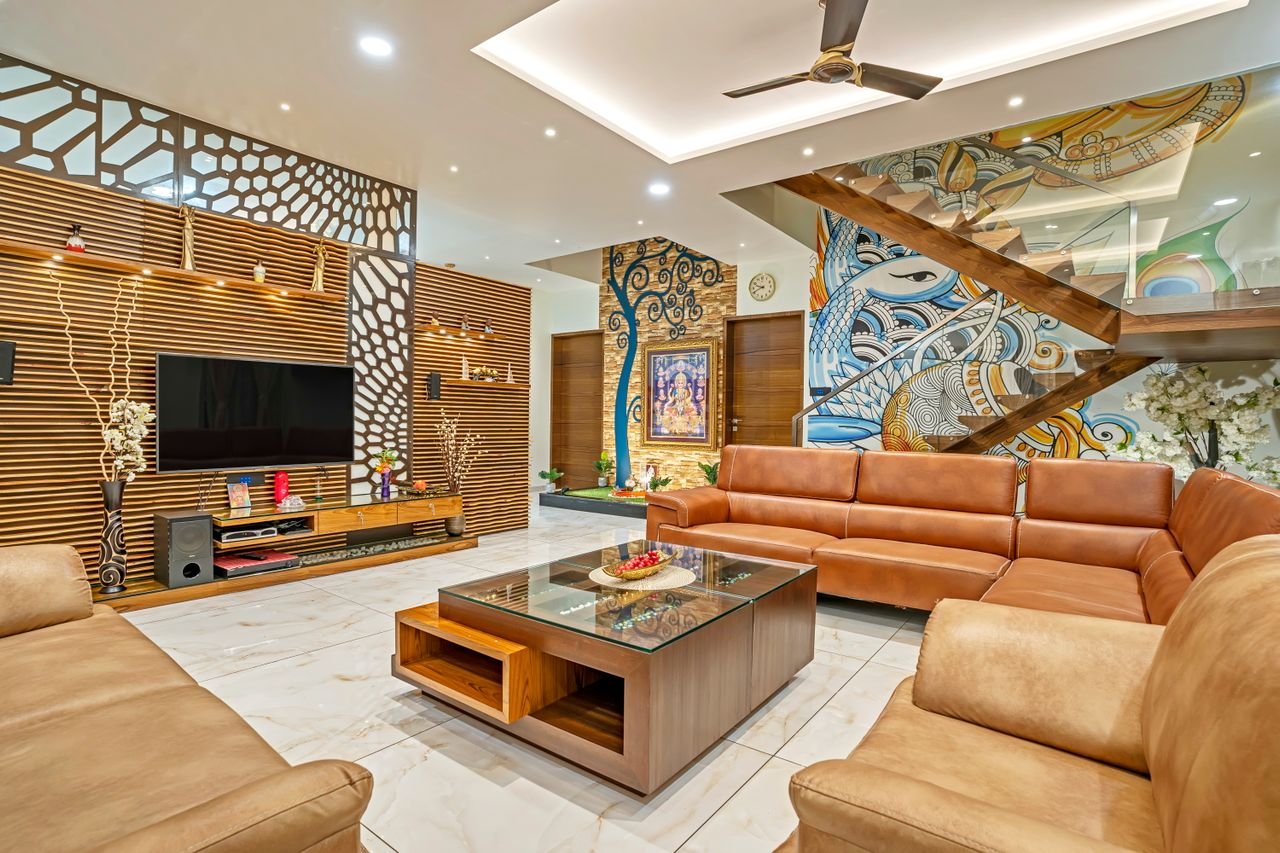
The leading Interior Design Trends of 2026 are moving away from perfect showroom styling. Indian homeowners want rooms that feel personal, adapt to family life and combine modern comfort with familiar materials and craft. The result is not one dominant look. It is a shift towards homes with warmer colour, layered lighting, flexible layouts, tactile finishes and objects that carry meaning.
For homeowners planning interior design in Lucknow, the useful question is not simply, “What is trending?” It is, “Which ideas will suit this property, climate, maintenance routine and budget?” This guide explains the strongest Indian Home Décor Trends for 2026 and shows how to adopt them without making the home feel crowded or quickly dated.
The safest 2026 strategy is a durable neutral architectural base, one clear cultural or colour story, flexible storage and layered lighting. Use trends boldly in paint, fabric, art and accessories; be more conservative with flooring, fixed joinery, electrical work and expensive wall cladding.
What Is Changing in Indian Home Décor in 2026?
Current design coverage points to richer, more narrative interiors, natural materials, expressive lighting and a softer return of ornament. At the same time, Indian homes still need storage, easy cleaning, weather-suitable materials and rooms that perform several functions. The strongest Home Decor Trends therefore combine expression with practical planning.
This is especially relevant in Lucknow, where compact apartments, larger family homes and villas require different solutions. A carved screen may become a focal point in a villa but overwhelm a narrow flat. A dramatic dark palette may suit a formal lounge with good daylight but make a small north-facing bedroom feel enclosed.
Read also: Home Interior Designer in Lucknow
Eight Trends at a Glance
| Trend | Best use | Commitment | Main caution |
| Story-led layering | Living rooms, foyers and family spaces | Low to medium | Collect slowly; avoid decorative clutter |
| Modern Indian craft | One focal feature per major zone | Flexible | Do not mix unrelated motifs |
| Natural, imperfect materials | Walls, floors, furniture and textiles | Medium to high | Check sealing and maintenance |
| Expressive colour and pattern | Paint, upholstery, rugs and art | Low to medium | Control the palette across open rooms |
| Soft curves and sculptural forms | Seating, tables, mirrors and lights | Medium | Measure circulation before buying |
| Flexible zoning and storage | Apartments and multi-use rooms | Medium to high | Avoid overbuilding fixed furniture |
| Layered, emotional lighting | Every room, planned by activity | Medium | Do not depend on one ceiling light |
| Climate-aware biophilia | Balconies, courtyards and daylight zones | Medium | Plan drainage, shade and plant care |
1. Story-Led, Collected Interiors
In 2026, a well-designed home can look collected rather than completed in one shopping trip. Books, art, photographs, travel finds and inherited furniture create a personal narrative. Layering works particularly well in living rooms and foyers, where one vintage chair, family artwork or handmade rug can give a contemporary shell more character.
Decision rule
Keep roughly two-thirds of the room visually quiet and let the remaining third carry personality. Group smaller objects instead of spreading them across every surface. If an item has no meaning, function or visual relationship with the room, it is probably clutter rather than layering.
Read also: Modern Home Interior Design Trends in Lucknow
2. Modern Indian Craft Without a Theme-Park Look
Indian Home Décor is becoming more regionally confident. Cane, brass, terracotta, handloom fabrics, carved timber, Madhubani art and blue pottery are being placed within clean contemporary rooms. In Lucknow, chikankari-inspired textiles, jaali geometry, scalloped forms and restrained Awadhi details can create a local identity without copying a palace interior.
Decision rule
Choose one lead craft language for a connected zone. A foyer might use a jaali-inspired screen and brass light, while the rest remains simple. Ask who made the piece, how it will be maintained and whether it can be repaired locally.
3. Natural Materials and Beautiful Imperfection
Stone, timber, clay, lime-like textures, linen, jute and cane remain important, but the 2026 approach celebrates grain and variation rather than making every surface look identical. Textured plaster, honed stone and visible wood grain can make neutral interiors feel warm without adding excessive decoration.
Decision rule
Use natural character where touch and ageing improve the experience; use durable engineered alternatives where water, staining or intensive cleaning is likely. In Lucknow’s hot summers, dusty periods and humid monsoon conditions, confirm sealing, edge protection, pest resistance and cleaning instructions before approval.
4. Expressive Colour, Pattern and Soft Ornament
After years of all-beige minimalism, richer colour is returning through deep green, terracotta, indigo, burgundy, ochre and warm earth tones. Pattern appears in cushions, curtains, rugs, wallpaper and decorative trims. This makes the current Indian Home Decor Trends feel energetic, but the most successful rooms still have a clear hierarchy.
Decision rule
Repeat one dominant colour at three scales: a substantial area, a mid-sized furnishing and a small accent. Keep permanent finishes calmer if you enjoy changing styles. In a small apartment, saturated colour often works better on one wall, cabinet section or textile layer than on every surface.
Read also: Top Interior Design Trends in Lucknow and Delhi
5. Soft Curves and Sculptural Comfort
Rounded sofas, arched mirrors, oval tables, fluted forms and sculptural lamps soften hard-edged modern rooms. Curves can also improve movement in compact layouts because furniture corners feel less intrusive. The trend is strongest when the form remains comfortable and proportionate, not when every item tries to become a statement.
Decision rule
Check the product’s real footprint, doorway access, seating depth and circulation clearance before ordering. Pair one or two curved pieces with simpler rectangular storage so the room stays balanced and usable.
6. Flexible Zoning and Furniture That Works Harder
Open layouts are being refined rather than abandoned. Pivot screens, sliding panels, rugs, lighting and furniture placement can separate work, dining and relaxation without building permanent walls. Storage beds, extendable tables, concealed desks and benches with storage remain valuable for apartments, provided their mechanisms are reliable.
Decision rule
Map the room across a normal day before designing it. Use custom joinery only where it resolves an awkward dimension or recurring routine. Leave some loose furniture so the layout can change as children grow, guests visit or work patterns evolve.
Read also: Small Home Interior Design Ideas
7. Layered Lighting as Part of the Décor
Lighting in 2026 is both functional and emotional. Ambient light establishes overall brightness, task light supports reading or cooking, and accent light reveals artwork, texture or plants. Sculptural pendants and wall lights can act as décor, while dimmers or simple scenes help the same room move from active daytime use to a calmer evening mood.
Decision rule
Plan lighting before the ceiling and electrical work. Prioritise glare control, correct task positions and accessible switching. Smart controls should add convenience, but essential lights must remain easy to operate manually.
8. Climate-Aware Biophilia
Biophilic design is becoming more practical: better daylight, shaded balconies, framed outdoor views, natural textures and a manageable number of healthy plants. For Lucknow homes, this may mean protecting west-facing glazing, improving balcony shade or creating a courtyard connection rather than installing a difficult indoor vertical garden.
Decision rule
Select plants for the actual light level and family care routine. Confirm waterproofing, drainage and service access for planters. A clear window, comfortable balcony chair and two thriving plants usually deliver more value than a large green feature that becomes expensive to maintain.
Read also: Top Interior Design Trends in Lucknow
Which Trends Suit Your Property?
| Home type | Prioritise | Use selectively |
| Compact apartment | Flexible zoning, layered lighting, calm base and reversible colour | Bulky curved sofas, deep wall textures and too much fixed joinery |
| 2BHK or 3BHK family home | Durable storage, personal art, modern craft and room-specific lighting | Open shelves in dusty areas and delicate fabric in high-use zones |
| Villa or bungalow | Natural materials, courtyards, crafted focal points and statement lighting | Large features without a maintenance or replacement plan |
| Rental or short-term home | Paint, rugs, curtains, art, portable lamps and loose furniture | Permanent cladding, complex ceilings and highly customised cabinetry |
How to Spend Wisely on 2026 Home Decor Trends
| Invest where performance lasts | Experiment where change is easy |
| Space planning, electrical layout and storage ergonomics | Wall paint, removable wallpaper and artwork |
| Comfortable seating and quality upholstery construction | Cushions, throws, rugs and decorative trims |
| Kitchen and wardrobe hardware used every day | Small lamps, ceramics and seasonal accessories |
| Waterproofing, surface preparation and correct installation | One fashionable colour or pattern in a controlled zone |
| A well-made local craft feature with a repair path | Mass-produced décor purchased only for a short trend |
A Six-Step Framework Before You Follow Any Trend
- Define the home’s mood: Choose three words such as warm, rooted and uncluttered. Use them to filter every option.
- List real routines: Record storage, entertaining, work, children, elderly users, pets, cleaning and maintenance needs.
- Separate permanent from replaceable: Keep floors and fixed joinery timeless; use colour, fabric and art for bolder expression.
- Check scale at the site: Measure furniture, clearances, daylight and viewing distances instead of relying on showroom impressions.
- Review samples together: Compare paint, laminate, timber, stone, metal and fabric under daytime and evening lighting.
- Compare complete quotations: Check drawings, quantities, brands or ranges, exclusions, timeline, warranty and change-order rules.
Choose a Direction, Not Every Trend
The best Interior Design Trends help you make a home more personal and useful; they should not pressure you to replace everything. Start with a durable base, choose two or three compatible ideas and let the room evolve. A Lucknow apartment may combine flexible storage, expressive textiles and layered light, while a villa may add natural stone, craft and a stronger indoor-outdoor relationship.
Lucknow Interio can assess your apartment, villa or renovation project and create a coordinated design based on your lifestyle, property conditions, preferred materials and budget.
Call 8800127922 or email contact@lucknowinterio.com to request a consultation and customized quotation for interior design in Lucknow.
Frequently Asked Questions
Which 2026 home decor trend is easiest to adopt on a budget?
Colour, textiles, art and portable lighting offer the quickest change with the lowest permanent commitment. Start with a defined palette, update cushions or curtains, and add one meaningful artwork or craft piece before changing fixed finishes.
How can I use Indian Home Décor in a modern apartment?
Choose one regional craft expression, such as handloom fabric, brass, terracotta or a Lucknow-inspired jaali pattern, and place it against a clean contemporary background. Limiting repetition keeps the home modern and prevents a themed appearance.
Are bold colours suitable for small homes?
Yes. Use saturated colour in a controlled area such as one wall, upholstery piece, rug or cabinet section. Balance it with lighter adjoining surfaces and good lighting. Repeating one colour in small accents creates cohesion without making compact rooms feel busy.
Are curved sofas practical for Indian living rooms?
They can be practical when their footprint, seating depth and circulation suit the room. Measure doorways and walking clearances first. In compact spaces, a rounded chair, coffee table or mirror may provide the effect with less space than a large curved sofa.
How should Lucknow's climate influence material selection?
Specify finishes for summer heat, dust and monsoon humidity. Confirm sealing, edge protection, moisture resistance, pest risk and cleaning requirements. Use shade and window treatments to control heat and glare, and provide drainage for balconies and planters.
Which trends are most likely to remain timeless?
Good lighting, comfortable furniture, natural material character, functional storage and meaningful craft tend to last because they improve daily living. Highly specific colours and decorative motifs are safer in replaceable layers such as paint, art and textiles.
How can an interior designer in Lucknow help me choose the right trend?
A designer can assess the site, family routines, climate exposure and budget; prepare layouts and lighting plans; coordinate samples; and turn selected trends into a coherent room-wise scope. Request a consultation and customized quotation before approving execution.